
What your iPhone counts as a flight of stairs
· 4 min read
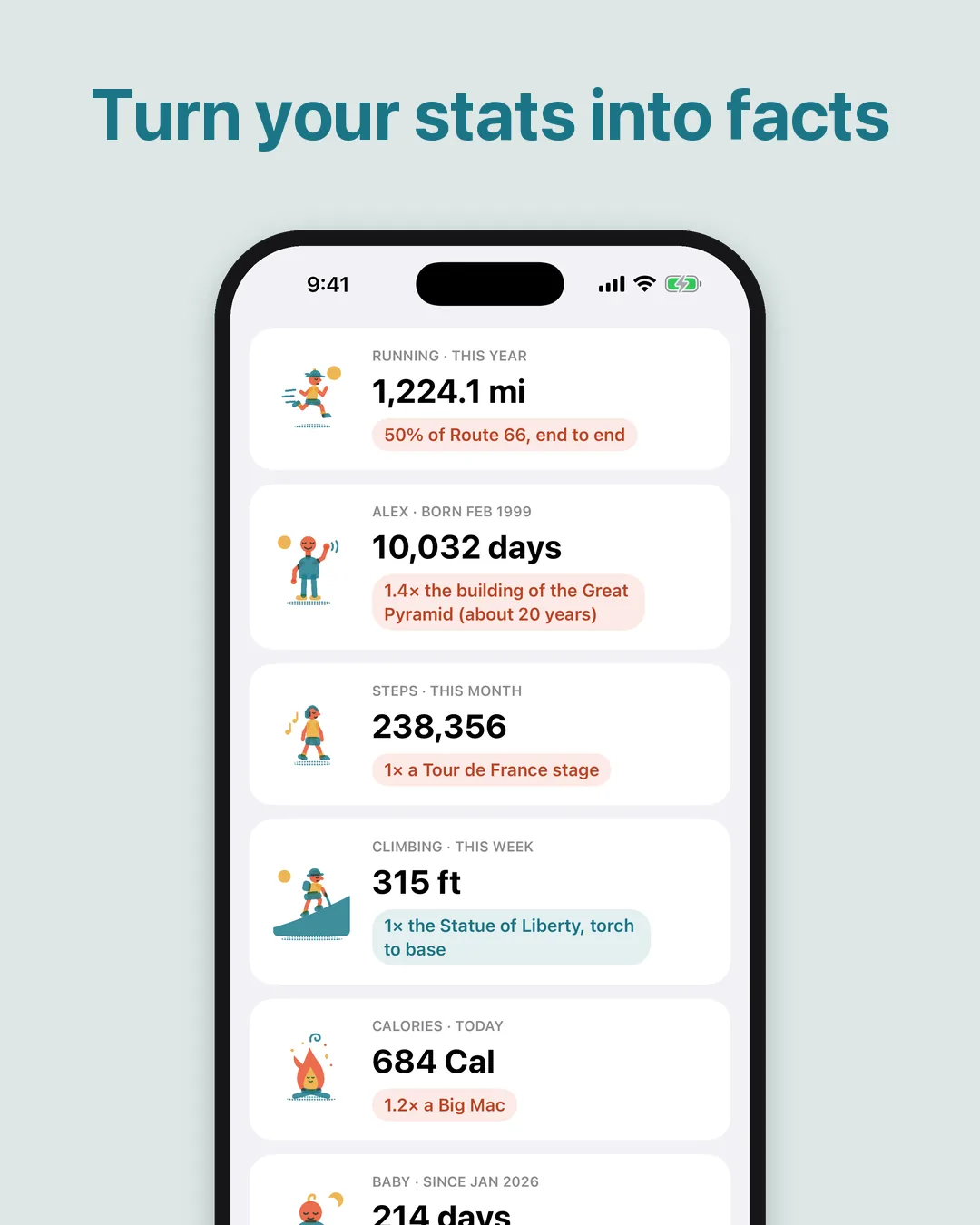
Your iPhone says you climbed fourteen flights today and you are certain you took the stairs twice. Both are right. The phone is not counting stairs at all.
It is measuring air, not steps
Every iPhone since the 6 has a barometer. Air pressure drops as you go up, and the phone converts that drop into height. Apple then scores roughly ten feet of ascent as one flight — a definition borrowed from typical building floor heights, not from anything it observed you doing.
So a flight is a unit of height wearing the name of a staircase. Nothing about a step is involved.
Which explains the strange results
Walk up a steep street and you will bank flights without touching a stair. Take a lift to the twentieth floor and you will bank none, because Apple filters out ascents your body did not do. Ride an escalator and it depends on whether the phone thinks you were walking.
The oddest one is weather. A fast-moving pressure system changes the reading without you moving at all, which is why a stormy day can quietly add a flight or two.
What that means for a landmark
The Empire State Building is 1,576 stairs to the 86th floor, which almost everyone calls 86 flights — one per floor. Your phone would record about 103, because the observatory sits around 1,050 feet up and 1,050 divided by ten is 103.
The Washington Monument is 897 stairs and 555 feet, so about 55 flights by the phone’s reckoning against 50 actual landings. The Leaning Tower of Pisa is 294 steps and roughly 183 feet, which is 18 flights to an iPhone.
None of these numbers is wrong and none of them agrees, because the plaque counts stairs, the building counts floors and the phone counts height. A number without its definition is not a fact yet — which is why every comparison in Humblebrag carries a link to where its figure came from.